
Mental health challenges are not a new phenomenon, and even people in the Bible had to deal with them. While King David, Elijah, Job, and St. Paul are well-known biblical figures who experienced mental health struggles, there are many others whose stories can be just as inspiring and enlightening. Following up on a previous examination of biblical figures and mental health, this month we look at four more well-known figures whose faith helped them to navigate a variety of challenging mental health experiences.
Leah (Genesis 29:16- 30:13): Leah was the first wife of Jacob, and although she had many children, she lived in the shadow of her sister, Rachel, whom Jacob loved more. Leah’s mental health challenges are evident in the names she gave to her children. For example, when she gave birth to her first son, she named him Reuben, which means “the Lord has seen my misery.”
“for she said, “It is because the LORD has seen my misery. Surely my husband will love me now.” – Genesis 29:32
Leah also named her second son Simeon, which means “one who hears,” expressing her own desire to be heard in her suffering both by God and her husband. Her third son she named Levi, which means “attached,” reflecting her hopes that her husband would become attached to her.
Despite her struggles, Leah remained faithful to God and found comfort in knowing that He indeed saw her and heard her prayers. Leah’s story is a poignant example of how difficult life and family situations, as well as struggles with our physical health, can impact our mental health as well. As the first wife of Jacob, she found herself in a difficult situation, constantly living in the shadow of her younger sister, Rachel, who was Jacob’s favorite wife. This led to feelings of inadequacy, loneliness, and unfulfillment. Eventually, she gave birth to Judah, who would become the ancestor of King David and, ultimately, of Jesus. The Gospels of Matthew and Luke, both of which provide genealogies of Jesus, illustrate the ways that Jesus’ ancestry helps us understand who Jesus is and the scope of his mission. That Jesus’ direct lineage includes individuals like Leah, who experienced mental health challenges, is an indication of how closely Jesus walks with us, even as we experience the kind of loneliness, and despair that Leah felt.
Leah’s story is a reminder that even in our darkest moments, we can find hope and comfort in our faith. It is a testament to the power of perseverance and the grace-filled resilience we have been gifted with. Through her story, we discover a God who sees and hears our struggles, even when we feel unseen and unloved by those around us.
Hannah (1 Samuel 1:21-28): Hannah was the wife of Elkanah, and she struggled with infertility. She was deeply distressed and prayed fervently to God for a child. When her prayers were answered, and she gave birth to Samuel, she dedicated him to the Lord’s service. Despite her joy at becoming a mother, Hannah continued to struggle with her mental health. She wept and refused to eat, and her husband could not console her.
Hannah’s story shows us that mental health challenges can arise even when our prayers are answered. However, like Leah, Hannah found comfort in her faith. She continued to pray and trust in God’s plan for her life, and her faith sustained her through her struggles.
Hannah’s story in the Bible is a powerful example of the mental health challenges that can arise from the experience of infertility. As the wife of Elkanah, she was unable to conceive a child, which was a significant source of distress for her. Despite her husband’s attempts to comfort her, Hannah continued to struggle with her emotional well-being, weeping and refusing to eat.
In her distress, Hannah turned to God for help. She prayed fervently for a child, promising to dedicate him to the Lord’s service if her prayers were answered. When her prayers were finally answered, and she gave birth to Samuel, she stayed true to her promise and dedicated him to the Lord’s service.
“Oh, my lord! As you live, my lord, I am the woman who was standing here in your presence, praying to the Lord. For this child I prayed; and the Lord has granted me the petition that I made to him. Therefore I have lent him to the Lord; as long as he lives, he is given to the Lord.” – 1 Samuel 1:26-28
However, even after the birth of her son, Hannah continued to experience feelings of anxiety and uncertainty, worrying about her son and his future. Nonetheless, her faith in God remained, and she continued to pray and trust.
Hannah’s story reminds us that prayer alone, even if answered in some way, does not guarantee that we will not continue to experience mental health challenges. Faith can be a source of comfort and strength in times of struggle, and turning to God in prayer can help us find solace and hope, all of which can build resiliency and improve outcomes, but mental health struggles remain complex and there are often no easy solutions or ‘cures’. Hannah teaches us the importance of seeking support when we need it, whether that means turning to our faith community, seeking professional help, or relying on our loved ones for continuing support.
Through her faith, and the openness that it brought to God’s continued activity in her life, even as she reeled with sadness and trauma, Naomi was able to maintain a space of hope, however small, within her heart allowing her to be aware of God’s hand in her grief and worry when she needed it most. Naomi’s story is a powerful testament to the mental health challenges that can arise from experiencing significant loss and grief.
Jeremiah (2 Chronicles/Jeremiah): Jeremiah was a prophet who lived during a tumultuous time in Israel’s history. He witnessed the destruction of Jerusalem and the exile of his people to Babylon. Jeremiah was known as the “weeping prophet” because he was deeply moved by the suffering of his people. He lamented their plight and struggled with his own experiences of depression and anxiety.
The prophet provides an example of the boldness with which we can cry out to God in our experiences of hopelessness;
“Why is my pain unceasing,
my wound incurable,
refusing to be healed?” – Jeremiah 15:18
And the value in giving voice to the great depths of the pain and suffering we bear;
“Woe is me, my mother, that you ever bore me, a man of strife and contention to the whole land! I have not lent, nor have I borrowed, yet all of them curse me.” – Jeremiah 15:10
Despite these challenges, Jeremiah continued to remind his people that God was with them even in their darkest moments and encouraged them to trust that God could bring healing even in the midst of suffering and hopelessness. Jeremiah’s story shows us that faith can sustain us even in the most challenging of circumstances.
“I know the plans I have for you, says the Lord, plans for your welfare and not for harm, to give you a future with hope. Then when you call upon me and come and pray to me, I will hear you. When you search for me, you will find me; if you seek me with all your heart, I will let you find me, says the Lord.” – Jeremiah 29:11-14
Jeremiah is one of the most prominent prophets in the Bible, and his story is a testament to the mental health challenges that can arise from witnessing and experiencing the trauma of suffering, oppression, and injustice. His story is also a powerful example of the role that faith can play in sustaining us during times of struggle. His unwavering hope in God gave him the strength to persevere through difficult times and to continue to speak words of comfort and hope to others. It is a story that recognizes the role of trauma and the mental health challenges that can arise from witnessing and experiencing suffering and injustice. However, his story also shows us that faith can be a source of strength and hope in times of struggle. By turning to God and seeking His guidance and support, we can find the strength to carry on and persevere through even the most challenging of circumstances.
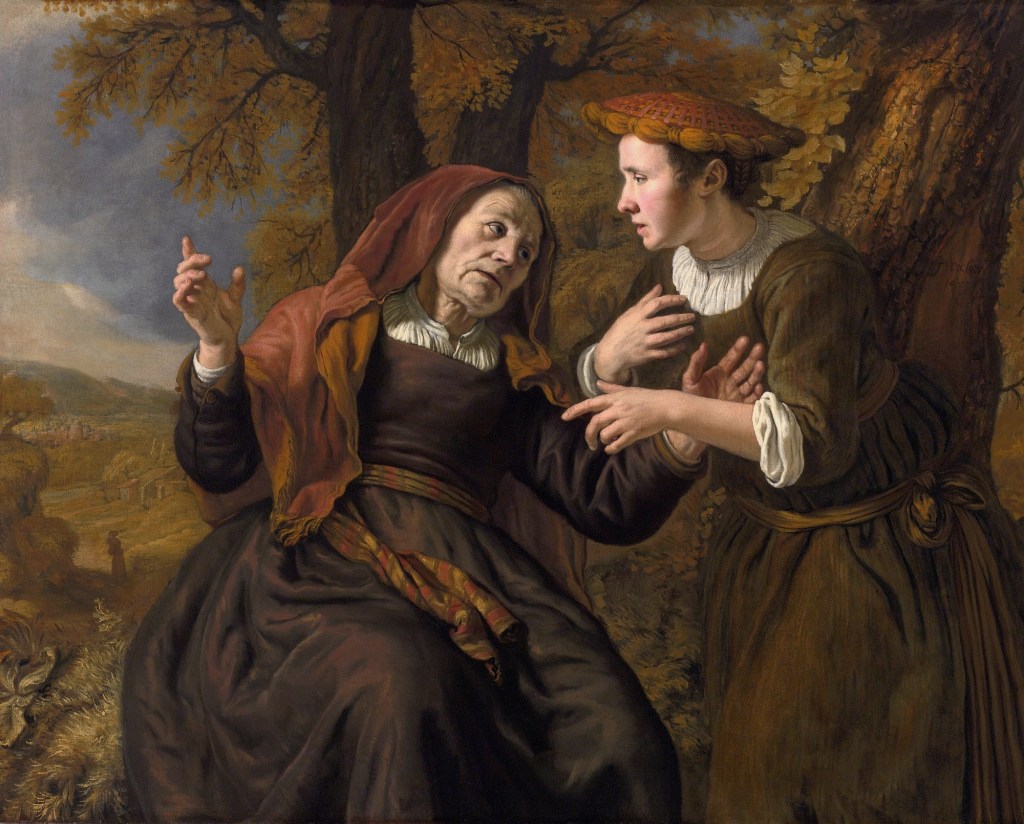
Naomi (The Book of Ruth): Naomi was the mother-in-law of Ruth, and she experienced significant loss in her life. She lost her husband and both of her sons, and she was left alone and destitute. Naomi was so grief-stricken that she changed her name to Mara, which means “bitterness.”
“Call me no longer Naomi,
call me Mara,
for the Almighty has dealt bitterly with me.
I went away full,
but the Lord has brought me back empty;
why call me Naomi
when the Lord has dealt harshly with me,
and the Almighty has brought calamity upon me?” – Ruth 1:20-21
Despite her profound grief, Naomi was sustained by her faith and the community and family around her. She returned to Bethlehem with her daughter-in-law, Ruth who was also grieving the loss of her husband, and together they worked to support each other and provide for themselves. Naomi recognized that in the companionship of Ruth, and in the support of her faith community, God had not abandoned her. Where grief, trauma, and the mental health challenges that come with these can lead us to self-isolate, Naomi’s story underscores the importance of social support and of opening ourselves to being a support for others. In spite of her grieving, she recognizes God’s hand in sending the right people into her life at the right time and encourages her daughter-in-law, Ruth to do the same as she immediately recognizes that the man who watched over and showed kindness to Ruth while she was gleaning grain from nearby fields, was in fact Boaz, a distant relative;
“Blessed be he by the Lord, whose kindness has not forsaken the living or the dead!’ Naomi also said to her, ‘The man is a relative of ours, one of our nearest kin.” – Ruth 2:20
Through her faith, and the openness that it brought to God’s continued activity in her life, even as she reeled with sadness and trauma, Naomi was able to maintain a space of hope, however small, within her heart allowing her to be aware of God’s hand in her grief and worry when she needed it most. Naomi’s story is a powerful testament to the mental health challenges that can arise from experiencing significant loss and grief. Her story is a powerful example of the role that faith can play in sustaining us through difficult times. Naomi’s story also teaches us the importance of seeking support and companionship when we are struggling with our mental health. Despite her grief and struggles, she was not alone. She had Ruth and other extended family members by her side, and together they were able to support and encourage each other.
These stories in sacred scripture help us to appreciate that mental health challenges are a universal experience. Leah, Hannah, Jeremiah, and Naomi are just a few examples of biblical characters who struggled with their mental health in various forms and for a wide variety of reasons. However, their stories also show us that faith can be a source of strength and comfort in times of struggle. Whether we are facing infertility, grief, or trauma, we can turn to God and trust in his love, mercy, and steadfast presence. As Leah found comfort in knowing that God saw her and heard her prayers, we too can find through our faith the divine presence who hears our cries and walks with us as a companion and guide in all our struggles.
As we navigate our own mental health challenges, we can look to the examples set by these biblical characters and draw inspiration from their stories. We can learn from their struggles, their perseverance, and their faith in God.
Caring for our mental health is an important aspect of our overall well-being, and it is crucial that we take care of ourselves physically, emotionally, and spiritually. This includes seeking professional help when necessary, practicing self-care, and building a support system of family, friends, and faith community. With the right resources and support, we can build our capacity for resiliency, improving our ability to weather the storms that experiences of mental health challenges can bring and find hope and healing on our journey towards mental and spiritual wellness.
 Emmaus Support Mental Health Ministries